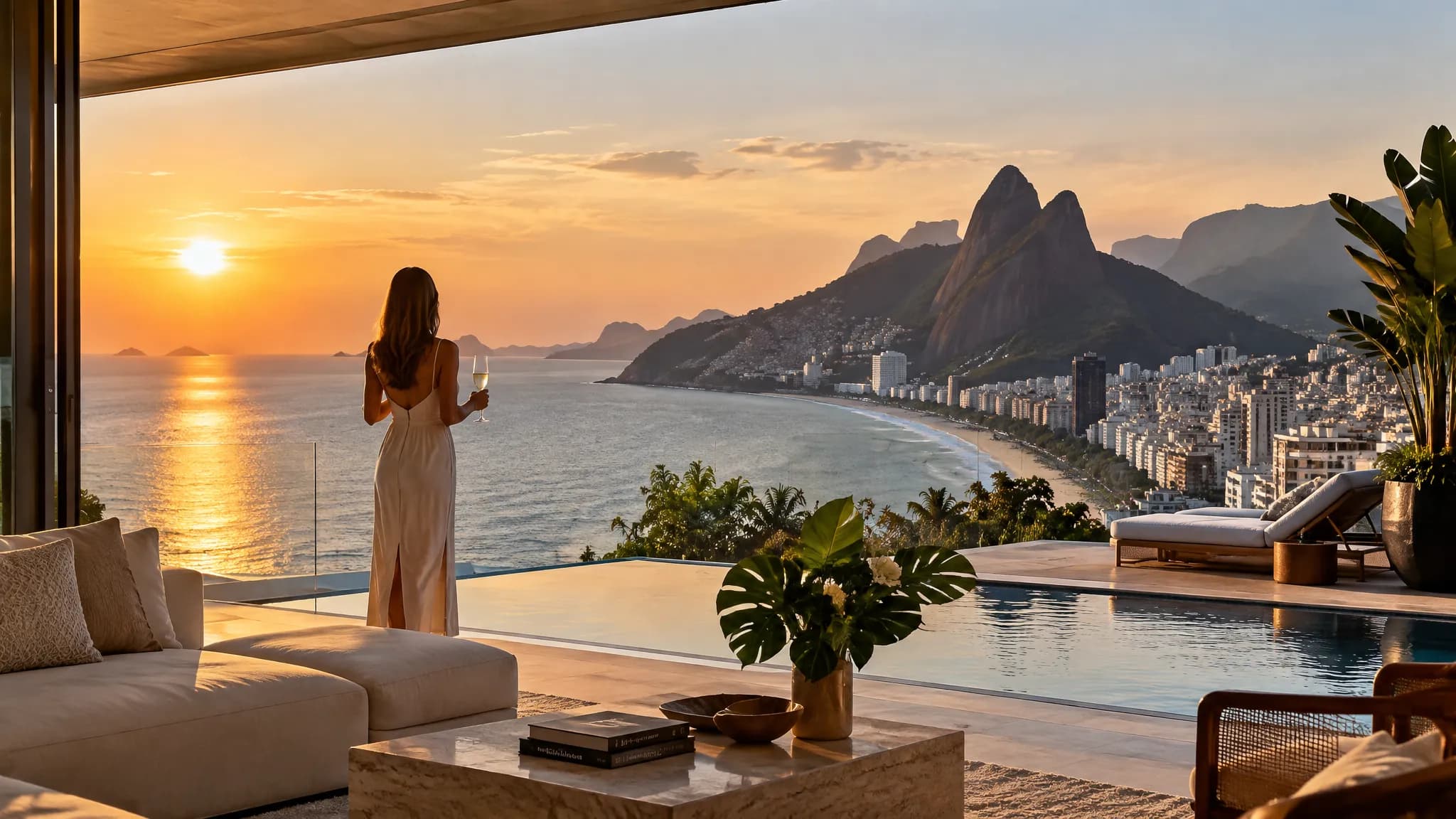
Why Rio’s Luxury Market Keeps Gaining Even With High Interest Rates
Even with the Selic rate at 13.75% per year, Rio de Janeiro’s high-end real estate market has not slowed down — quite the opposite. Over the past 24 months, high-liquidity neighborhoods have posted a 12% appreciation, and the city’s average price per square meter is already at R$ 8,095. In areas like Leblon, premium launches exceed R$ 25,000 per square meter.
For those of us who follow the sector closely, this movement is no surprise. It reflects a rare combination: limited land supply, established infrastructure, and an increasingly informed buyer profile — one that already understands that high-end real estate is also a way to protect wealth.
South Zone: the safe haven that never stops reinventing itself
Rio’s South Zone remains the market’s “safe haven,” with an almost complete shortage of available land. The movement now is different: buying resale properties in prime locations and fully renovating them, combining an established address with a tailor-made project — without giving up the view, the neighborhood, or the local lifestyle that makes Rio, Rio.
Barra da Tijuca and Recreio: the new family hubs
Meanwhile, Barra da Tijuca and Recreio are in a different phase: they are consolidating as family hubs, with complete infrastructure, security, and space — features that became even more important after remote work stopped being the exception. It’s a movement that speaks directly to those seeking quality of life without giving up proximity to the city.
Porto Maravilha: the region is at its peak
The Porto Maravilha area is also experiencing a special moment in 2026, with thousands of new residents moving into residential buildings delivered between 2022 and 2024. It is proof that urban revitalization, when done well, transforms not only the landscape, but also the way people choose to live.
Why waiting can be costly
One figure stands out: with the Selic rate at 13.75% per year, waiting for interest rates to fall before buying may mean paying, in practice, more for the same property — the opportunity cost of leaving money idle while the asset appreciates. Add to that the increase in the SFH cap to R$ 2.25 million, which made financing and FGTS use easier in a price range that had previously been excluded — and the result is a hotter market that is also more accessible, even in a high-interest-rate environment.
What this means for you
If you’re thinking about buying — whether to live in or invest — this is one of those moments when understanding the numbers makes all the difference in the decision. At Casas do Mar, we closely follow what is happening in each region and help you find the right property, at the right time, with the curation and attention that a decision like this deserves.